

PLLA Skin Boosters vs. NAD Supplements vs. Exosomes: What’s the Difference Between These Regenerative Aesthetics?
Faroha Aesthetics2026-02-24T07:45:26+00:00The field of aesthetic medicine has expanded its range of injectable skin rejuvenation treatments through products that go beyond traditional hyaluronic acid fillers. The development of exosome-based therapies, PLLA skin boosters, and NAD+ supplements will establish new anti-aging solutions by the year 2026.
The treatments that retailers market as “skin boosters” actually provide different therapeutic effects. All parties involved in skin rejuvenation who operate in clinical settings need to learn about treatment mechanisms, as well as treatment benefits and treatment drawbacks.
The article explains three main differences between exosomes and NAD supplements, PLLA skin boosters, and their current use in aesthetic treatment protocols.
What are PLLA Skin Boosters?

The skin booster PLLA injectable biostimulants work through two mechanisms, which establish the body’s natural collagen production process while they provide immediate volume. The skin treatment PLLA fillers operate by delivering microsphere particles into the dermis, which activate fibroblast cells to create skin renewal effects. The process starts with neocollagenesis, which creates collagen structures that develop over a time period of weeks to months, and this results in skin that becomes firmer with thicker dermal layers and improved elasticity.
The long-lasting skin benefits of PLLA fillers provide two advantages: they create a smoother skin texture, and they restore the natural appearance of sagging skin. The effects of PLLA skin boosters last between 12 and 24 months, which can be extended through regular maintenance sessions. The product achieves its best results when applied to the hands, face, neck, and body because it creates a youthful appearance that appears natural.
PLLA skin boosters provide users with multiple advantages, but they still have disadvantages. The treatment requires multiple sessions before users notice results in their target area because it does not provide instant results.
Also, results following PLLA injectables are progressive, not immediate, because the collagen stimulation process takes weeks to months to be fully restored. But, overall, PLLA skin boosters are still a fan favorite, often chosen for structural rejuvenation rather than surface-level hydration only.
Check out the brands we offer: Power Col-Tra | Gana X PLLA | Olidia 365 mg | Elaxen PLLA
What are NAD Supplements and NAD+ Skin Therapies?

NAD (Nicotinamide Adenine Dinucleotide) is a vital coenzyme involved in cellular energy production and DNA repair. In aesthetics, NAD is used in oral supplements, IV therapy, and increasingly in skin-focused protocols. If you are asking how NAD works, it reaches the cellular level to rejuvenate, enhance mitochondrial function, support cellular repair, and reduce oxidative stress.
NAD supplements also improve skin vitality and glow, as well as support anti-aging at the cellular level. It also enhances energy and metabolic health and complements aesthetic procedures to maximize their effects.
However, NAD is not a volumizer or collagen stimulator like the PLLA skin booster. They are more like supporting cellular functions and are nutritional supplements that aid in boosting energy at the cellular level. Their results are also subtle and systemic; thus, you may not see where it worked specifically. This requires continuous supplementation to maintain the results. Overall, NAD treatments are best categorized as cellular support therapies, not structural skin treatments.
Check out the brands we offer: Exo NAD+ | iLLUMA NAD | Hanheal NAD+ Complex
What Are Exosome-Based Skin Boosters?
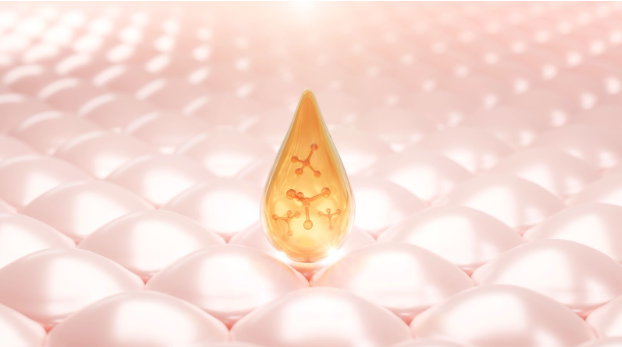
Exosomes, on the other hand, are extracellular vesicles derived from stem cells, rich in growth factors, peptides, and signaling molecules. They work within the body by delivering regenerative signals to skin cells, promoting repair, inflammation control, and regeneration. They also enhance collagen, elastin, and angiogenesis, leading to healthier hair and skin.
Exosomes’ primary benefits revolve around how they can accelerate skin repair and improve skin tone, texture, and radiance quickly. They also enhance the results of lasers, RF, and microneedling, maximizing their optimal effects and offering the patient minimal downtime as well. They can also be applied to the hair and scalp, where they can rejuvenate and stimulate dormant hair follicles to grow again, creating a healthier scalp barrier and hair strands.
However, exosomes are also surrounded by their own limitations as a cellular regenerative product, where their effects are more supportive rather than volumizing. Exosomes also need to be combined with other procedures for more optimal results. The brand of exosomes heavily influences their quality, thereby varying significantly. Thus, exosomes are best described as regenerative enhancers, not fillers or biostimulators.
Check out the brands we offer: Exoroot | Exoxe Face | Exovera | Hanheal Exosome Facial Rejuvenation
PLLA vs NAD vs Exosomes: A Side-by-Side Comparison
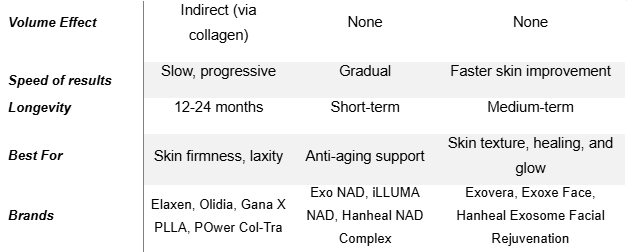
Below is a side-by-side comparison of the three biocomponents with each of their advantages and features over the others, so you can see the bigger picture of how each works significantly differently. PLLA boosters display the ideal regenerative properties of an aesthetic product; they produce both collagen stimulation and volumizing effects, thus they are best used to restore skin laxity. While NAD supplements, although a newer innovation, can still help repair cellular DNA and boost its energy but show gradual effects without the primary effects of PLLA boosters. NAD supplements work better as an anti-aging support. On the other hand, Exosome skin boosters have regenerative signaling properties, aiding in quicker skin improvement, making them perfect for the enhancement of skin texture, wound healing, and glowing skin.

Which Treatment is the Best in 2026?
The answer is not that simple, nor is it one vs. the other. There are more effective approaches to tackle this dilemma. For example, in this modern era of 2026, we differentiate each of these regenerative aesthetics and use them accordingly:
- PLLA for structural collagen
- Exosomes for regeneration and recovery
- NAD for cellular longevity
Modern aesthetic protocols increasingly combine all three, creating layered anti-aging strategies rather than single-solution treatments.
How Are Regenerative Aesthetics Trending in 2026?
Regenerative aesthetics are becoming popular and trending for their alternative approach to healing and improving the skin from the cellular level. Patients, now, want treatments that improve skin health, not just appearance. They want something that not only works on brightening the skin but also on how it can work to solve anti-aging issues from within the body.
Moreover, regenerative aesthetics has longevity medicine integration, as it can work as a maintenance treatment, especially for those who really need it (e.g., severe signs of aging that can not be remedied with just dermal fillers and Botox). NAD therapies also bridge aesthetics and wellness, as they produce natural, long-lasting results. While PLLA fits the demand for subtle, durable rejuvenation. And exosomes are an evidence-based innovation in that they are backed by growing clinical research.
Final Thoughts on the Difference Between PLLA Skin Booster, NAD Skin Therapy, and Exosomes
It is important to know that regenerative aesthetics are just the beginning of anti-aging support at the cellular level. It can significantly change the course of treatments that center on the signs of aging. These components—PLLA skin boosters, NAD supplements, and exosomes—are not competitors, but they are complementary tools in advanced aesthetic medicine. Clinics that understand how to layer these treatments will lead the future of skin rejuvenation. They will have to stock all of these regenerative products to help patients determine what their body needs and what their skin tells them. By knowing each of these components’ main benefits, we can take advantage of how each of them can tackle certain issues that the others can’t. By not letting them compete, we can build a harmonious and more balanced treatment plan for our patients by combining one or two or both of these regenerative aesthetics.
FAQs
Is PLLA better than exosomes?
They serve different purposes. PLLA stimulates collagen, while exosomes enhance regeneration and healing.
Can NAD replace skin boosters?
No. NAD supports cellular health but does not replace injectables.
Can these treatments be combined?
Yes. Combination protocols are increasingly common in 2026.







Leave a Reply